
Finding Plain Township Residents
A Plain Township residents directory works best when the search fits the question. Start an address in the Stark County Public Access Site, which provides the parcel, owner of record, tax mailing fields, legal description, and tax district. Check a known person through the Ohio voter tool, not by trying to browse a street. For an older household, use a dated directory or library index before following a Recorder or Probate trail.
The legal description and tax district are the stable joins. A property profile can use Canton or North Canton as its postal city while still belonging to Plain Township. Owner and tax mailing fields may not match the physical parcel address. Treat those fields as a documented lead, then compare a matching record and date rather than claiming every person at an address.
- Search the Stark property roll by address, owner, or parcel.
- Keep the parcel number, legal description, tax district, and the exact owner spelling.
- Use Ohio Voter Lookup only for a named person and Stark County.
- Check Recorder documents or a library directory when a date-bound question needs more evidence.
- Make a focused request to the custodian if the official online route ends.
Note: A record result describes what one office held on a particular date, not a complete household at the address.
Reading the Plain Township Property Roll
The Auditor search accepts owner entries in LastName FirstName order with no comma. A parcel ID may be partial, must use ten total characters, and has no spaces. For a street address, leave the suffix out first; street-only searching can return matching addresses. City and ZIP are optional narrowing fields, not tests of Plain Township geography. Wildcards and advanced criteria can help when an address format changes.
The Stark County Public Access Site separates owner, situs address, mailing name and address, legal description, tax district, land use, acreage, review data, values, sales choices, and GIS links. It may also show tax-program fields. A tax mailing address or owner-occupancy credit is not a directory of residents.
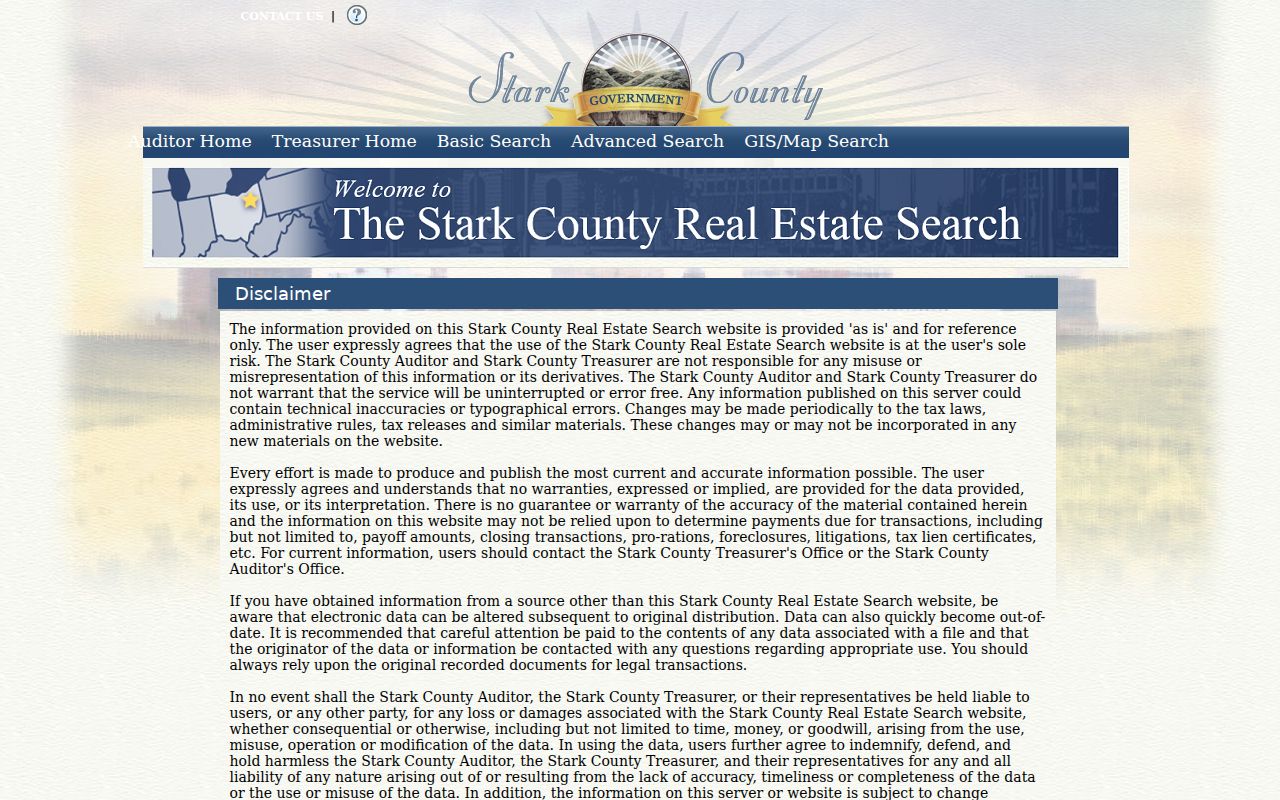
The profile is useful because it makes the parcel and tax district visible beside the postal address. Use that comparison before treating Canton or North Canton as a jurisdictional result.
Plain Township Recorder Name Trails
Stark County's land collection begins in 1809, while the Recorder quick guide says online name entries run from 1982 to the present. For the documented quick method, enter surname then first name without punctuation, leave the other fields unchanged, select Search, and use an Instrument # to open the specific record. Preserve the party spelling, date, and legal description before moving backward through a land trail.
The CountyFusion Recorder entry point is the official online start. If it fails or the needed record predates the online name span, use the Recorder counter, phone, or mail-copy route. Online copies are described as free; staff copies are $2 per page, self-service copies are $0.10 per page, and certification is $1 per document. Confirm terms before sending a request, fee, and stamped return envelope.
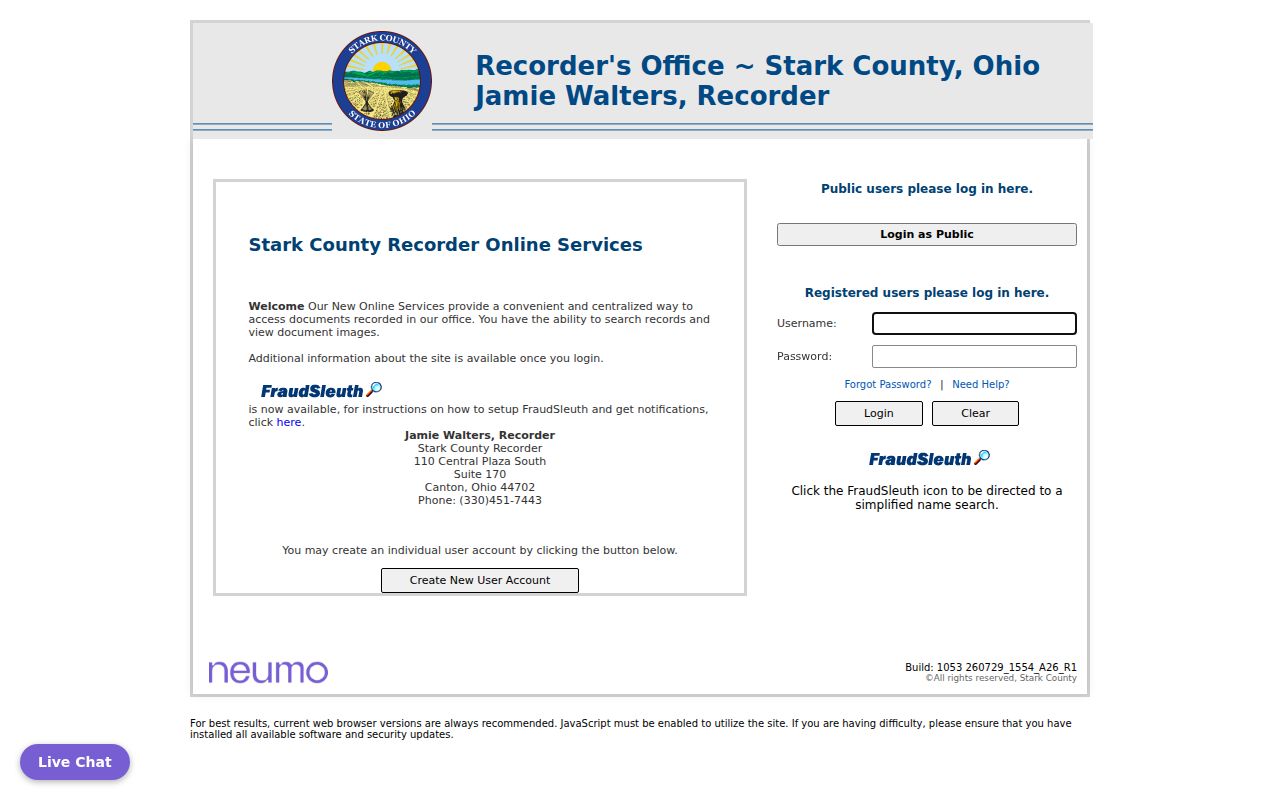
Recorder parties show a recorded-document connection. They do not prove present residence. Pair an instrument with the same parcel's legal description and another dated source before treating names as a match.
Plain Township Records Custodians
Plain Township has no single city-hall residents roll. Stark County offices hold the property, land, court, probate, map, and building layers. State offices supply voter and other statewide tools. The right counter depends on whether the question concerns a parcel, a recorded instrument, a case, a historic estate, or a registration. The address-focused chain is described in the Plain Township street directory.
Stark County Recorder
110 Central Plaza S, Suite 170
Canton, OH 44702-1409
330-451-7443
CountyFusion document search
Stark County Auditor
110 Central Plaza S, Suite 220
Canton, OH 44702
330-451-7357
Public Access Site
Stark County Board of Elections
3525 Regent Avenue NE
Canton, OH 44705
330-451-7000
Recorder, Auditor, and Board counters provide an alternate channel when a portal does not answer a narrow records question. Probate, Clerk, GIS, Tax Map, and Building Department routes add different types of support.
The Clerk of Courts handles Common Pleas civil, criminal, domestic-relations, and juvenile routes through Stark CJIS. Canton Municipal Court separately lists a Docket Search and says it serves Plain Township, but the reviewed form did not expose its live field labels. Use the official online routes for a known case question, then call or visit the appropriate court counter for a non-online file or copy. Probate is separate for estates, guardianships, wills, marriage licenses, and historic probate material. The Probate records route includes counter, index, and archive paths rather than one complete online file.
Birth research has its own split. The Stark County Health Department accesses Ohio birth records through an online ordering channel and an in-person kiosk. Birth registrations before 20 December 1908 belong with Probate’s historic route. Ohio Revised Code 3705.23 allows certified copies on a signed application and fee, subject to its stated limits, so a historical index is a lead to the right custodian, not a public name list. For land and project context, the Stark GIS viewer provides parcel search, layers, select, identify, measurement, and print controls. A selected parcel can then be compared with the Auditor profile. The Building charge search accepts a permit or invoice number, owner in last-name-first order, project street number and name, or contractor, one criterion at a time. For a Township zoning file, no public index was found: contact Zoning with a defined address, date range, and record category, then use a narrow R.C. 149.43 request if needed. Plain Township Zoning lists 330-492-4686 and weekday hours of 8:00 a.m. to 4:00 p.m. House-number questions belong with Stark County House Numbering at 330-451-7389. The building and zoning layer can date a project, but it cannot identify a household. Pair a permit clue with the Recorder, a dated directory, a parcel, or another record that actually answers the person or address question. A portal is one channel, not the only channel documented for Plain Township research.
Plain Township Voter Checks by Name
The Ohio Voter Lookup is a specific-person tool. Enter a first name, last name, and Stark County, then resolve an address choice if the service needs one. A successful result can show registration status, precinct, and polling location. It is useful only after a person is already identified. The service does not document a browseable Plain Township street list.
For a dated county-file question, the Ohio DATA Act archive has election selection, start and end date controls, county selection, Search, Clear, and Batch & Download. Its selected date span is limited to seven days, and it preserves at least 22 months of county voter-file snapshots. Telephone numbers and email are not public voter fields, and protected addresses can be suppressed. The archive delivers a county registration file generated for a particular day. It is a date-specific public-record route, not proof that every listed person currently has the same address. The Board of Elections can explain access and inspection procedures when a public file is needed.
The Board's regular weekday hours are listed as 8:30 a.m. to 4:30 p.m. Its office is at 3525 Regent Avenue NE, Canton, OH 44705, with 330-451-7000 as the main telephone. A request that names the person, address, requested date, and public fields is clearer than an open-ended search request. State guidance permits inspection while recognizing that copying may be limited when it would interfere with election administration. Participation history, where available in registration records, identifies an election in which a ballot was cast, never a ballot choice. When the data in question is not part of the individual lookup display, ask the Board which public file, date, or inspection route applies instead of assuming the voter form is the complete record. The county archive is valuable for historical civic research because it provides a preserved snapshot instead of an undated name list. Compare the selected date with a parcel or directory date before treating two records as a possible match. The election route should never be used to infer a protected address, to bypass a missing result, or to reconstruct a block of individuals from the individual lookup form.
Note: A voter result confirms the limited information the official service displays at that time, not every member of a household or every address connected to a similar name, mailing field, or older directory entry.
Plain Township Record Terms That Matter
Matching words across systems can prevent a search from following the wrong address. The property profile supplies the land anchor, while the Recorder adds the recorded document trail. The library adds a dated directory listing. Each term has a narrower meaning than it may have in casual conversation.
- Parcel
- A taxed land unit identified by a parcel number and legal description.
- Index
- A finding tool that points to a record. It is not automatically the record image.
- Criss+Cross directory
- A reverse directory that starts with an address and gives dated listed names or businesses.
- Legal description
- The recorded land description that can survive a changed mailing-city label or address format.
A situs address is the physical location assigned to a parcel. It is separate from the tax mailing address, which tells the Auditor where tax correspondence goes. A plat is a recorded map of lots or a subdivision layout. These distinctions matter when an older entry uses a different street format, when a mailing city crosses the township line, or when a map needs to be matched to a recorded instrument.
An Instrument # is the Recorder result control that opens a specific document in the documented quick-name process. Grantor and grantee describe the parties transferring and receiving an interest in a recorded document. A chain of title follows those recorded transfers backward. It documents land parties, while a directory, census, or probate file may add a separate and dated piece of family context.
A docket is the court’s index or list of case activity, not proof that every detail of a case is public or that a party is at a current address. An index points to a record but may not include an image. A certified copy is an authenticated copy issued through the custodian’s process. Courts and vital-record custodians may limit sealed, expunged, juvenile, adoption, protected, or otherwise restricted material, so the request should name the case or event instead of demanding a broad name search.
Current Plain Township Resident Sources
Current sources in a Plain Township residents directory have distinct limits. The parcel profile identifies an owner of record and tax correspondence. The voter form confirms a named registrant. A Recorder search identifies parties to a recorded document. Courts, Probate, credential records, and business filings answer narrower questions. None should be combined into a claim that one system lists every person at a location.
| Source | What it can show | Custodian | Access route |
|---|---|---|---|
| Property profile | Owner of record, tax mailing field, parcel and legal description | Stark County Auditor | Public search, counter, phone |
| Voter Lookup | Named registration status, precinct, polling location | Ohio Secretary of State | First name, last name, Stark County |
| Recorder index | Parties to a recorded land document | Stark County Recorder | Online guide, counter, mail request |
| Probate or court path | Public case or historic filing context | Probate, Clerk, or court | Portal, counter, index, or archive |
| Library collection | Dated directory, newspaper, and index leads | Stark Library | Genealogy and reference routes |
For one person, look for two independent anchors such as the parcel legal description plus a Recorder party, or a known address plus a correctly dated directory. A same-name result without a second anchor is not enough to connect a person to Plain Township.
Plain Township Records: Official or Compiled
Official sources identify who made the record, the date, and the route for a correction. Compiled commercial people lists can mix names and addresses collected at unknown times. They may be useful only as an unverified prompt to check an original custodian. The differences matter most when a common name, an old tax mailing address, or a changed postal label enters the search.
| Record route | Strength | Practical limit |
|---|---|---|
| Official Auditor, Recorder, court, voter, or library source | Named custodian and documented context | Each source is limited to its own record purpose. |
| Commercial compiled list | May suggest a spelling or older address | Dates and source quality may be unclear; verify it at the custodian. |
For an error in a public record, identify the record number and ask the office that created or holds it about its correction procedure.
Do not send payment because an unexpected message claims a new deed, copy, or account problem. Start with the original record number and the custodian’s published route. A Recorder document question belongs with the Recorder; a parcel-field correction belongs with the Auditor; a court-copy question belongs with the court. An office can explain what it can correct and what procedure applies. That direct route is safer than treating an unsolicited message as proof.
Keep a short audit trail when a fact matters: the record title, custodian, record or parcel number, date searched, and the exact field or document used. If the underlying record is wrong, return to that office rather than asking a different office to rewrite it. Where a public office publishes a defined redaction or correction process, follow that process and retain the response. No general statewide rule promises deletion of an accurate record that a custodian is required to keep. The same approach applies to a misplaced identity match. Compare the date, legal description, address form, and record purpose before connecting a name to a Plain Township result. If those anchors do not agree, record the conflict and do not convert it into a biographical conclusion.
Plain Township Names at Stark Library
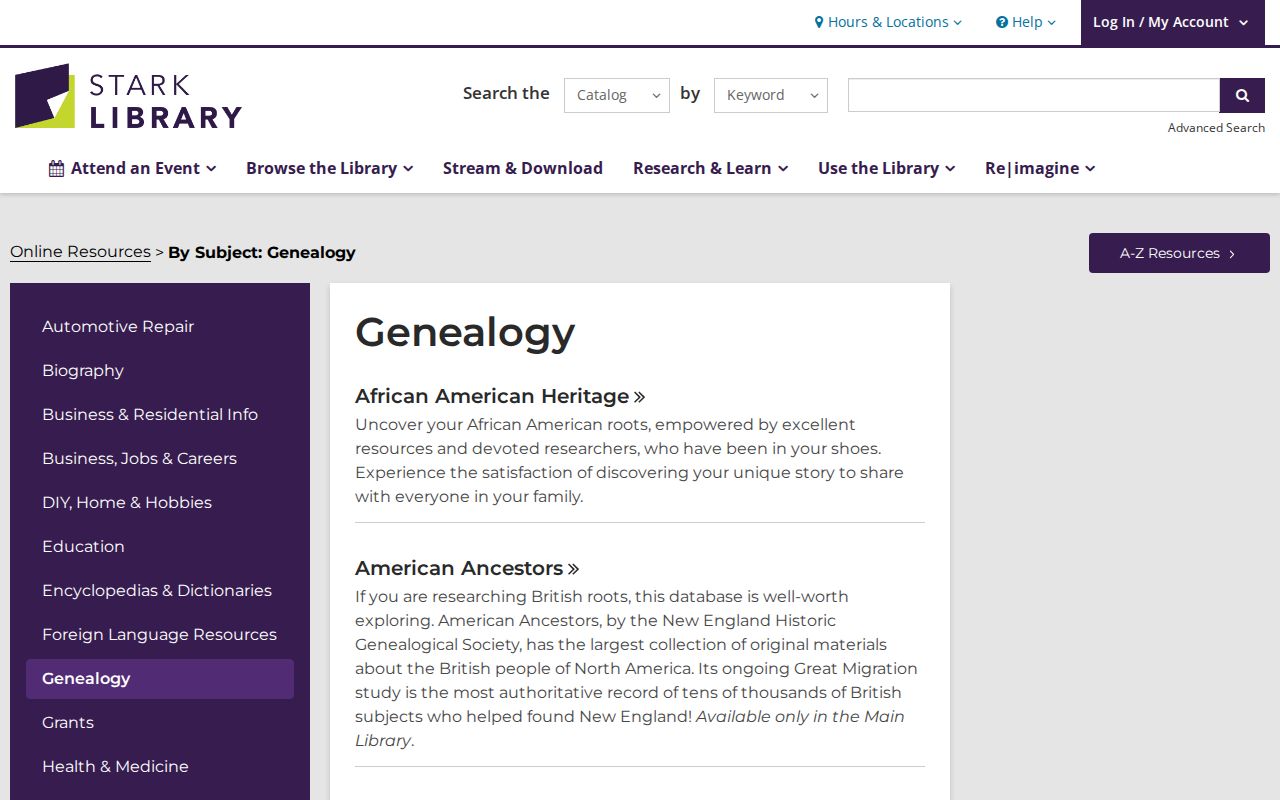
Stark Library is the local history shelf behind an older Plain Township name. Its genealogy resources include American Ancestors at the main library, in-library Ancestry Library Edition, Fold3, Heritage Hub, HeritageQuest, MyHeritage, NewspaperArchive, Sanborn maps for Ohio, Stark Memory, and a historical news archive spanning 1810 to 1946. Its research FAQ specifically confirms both the Canton City Directory and Canton Haines Criss+Cross Directory.
The Stark Library genealogy resources page is shown here. The conventional directory moves from a name to an address. Haines Criss+Cross reverses that route from an address to listed names or businesses for the volume date. Ask genealogy or reference staff for the actual volume or catalog because the reviewed public sources do not provide a verified complete Plain Township run.
Historical directories commonly center adults and householders. A wife may appear under a husband's entry, children may be absent, and a dated listing is not a census of every resident. The library says the Canton directory was often annual, later biannual, had a three-year World War II break, and is now annual. Compare entries from nearby available volumes, but do not fill the break with a presumed move or a presumed household.
The library's Index Files add more dated leads, including military discharge material, veteran grave registration, an 1865 enrollment item, newspaper deaths and marriages, and an 1875 atlas. Those are separate finding aids, not a consolidated people database. Its historical news archive spans 1810–1946. Sanborn maps are available as an Ohio resource for 1882–1962, though a particular community sheet still needs confirmation. These sources can test an address or name trail when the directory shelf has a gap, but each result needs its own date and source note. For older legal or family material, the library and University of Akron Archives hold transferred Probate groups, while Probate retains estate microfilm since 1810. Staff can direct visitors to indexes, but the research did not identify a service that completes a genealogy search for the visitor.
Plain Township Results Missing by Design
Some information is absent for a lawful reason. Ohio Safe at Home gives qualified participants a substitute address in government records. Ohio Revised Code 149.45 controls specified sensitive information posted online and provides a defined redaction process. Voter phone numbers and email are not public voter fields. A blank result is not evidence that a person is ineligible, absent, or connected to another address.
The Attorney General's Ohio Public Records Act guidance explains the general inspection and copy baseline under R.C. 149.43. A requester may remain anonymous and need not state a purpose, though a custodian can seek clarification of an unclear request. Direct the request to the office that made or holds the record.
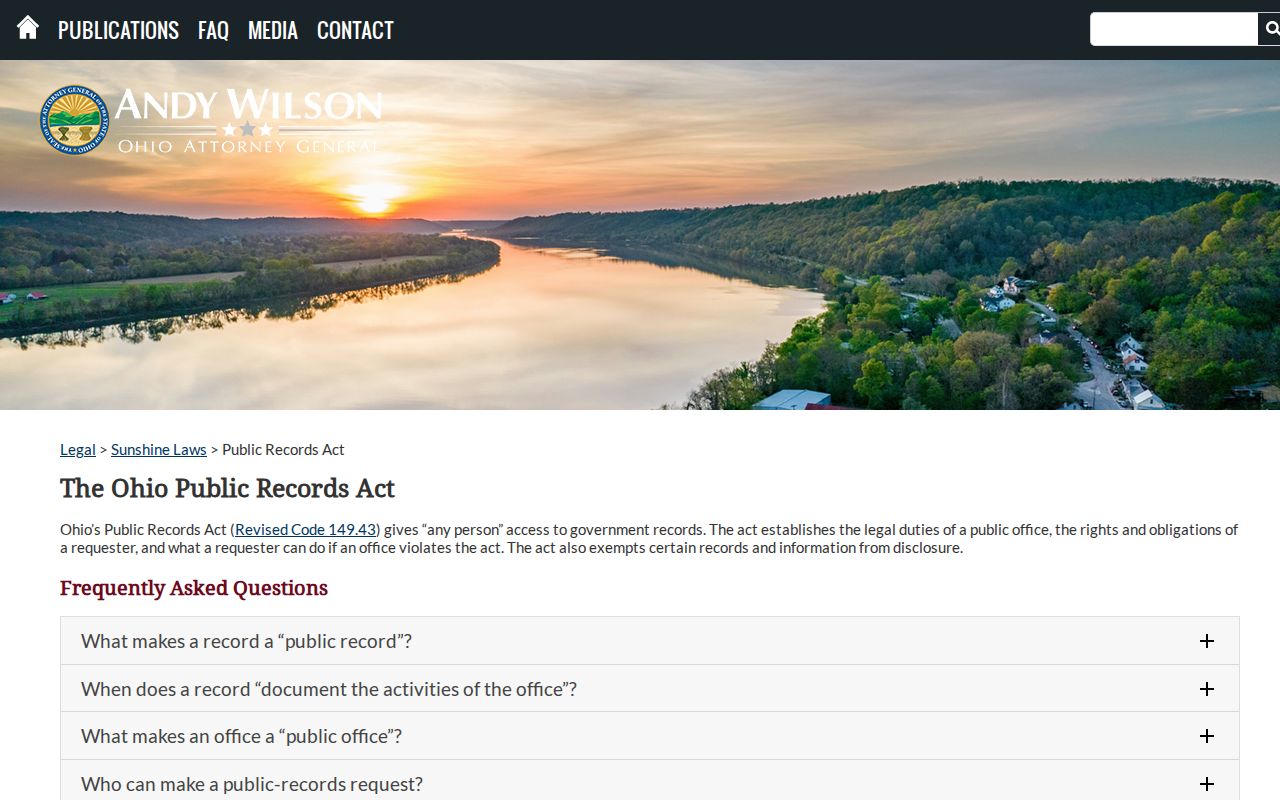
Under the Sunshine Law, any person may inspect public records during regular office hours and receive copies within a reasonable period. The office must respond promptly, but the research does not supply a universal number of days. An unclear request may be clarified, and a lawful exception may limit access. Name the record category, address or parcel if relevant, date range, and desired form of copy. Send a Township-created record request to the Township and a county-created request to the county custodian.
R.C. 149.45 is narrower than a general removal right. It addresses specified sensitive identifiers held online and provides a written redaction route in defined circumstances, including a five-business-day response, redaction, or explanation framework. The statute also has defined protections for certain public-service roles, subject to its exceptions. Safe at Home is likewise an address-confidentiality program, not a missing-record problem to solve by combining other searches. Ask the original custodian or the program for the lawful process instead of trying to reconstruct protected information. Motor-vehicle address data follows separate restrictions and is not an address-research fallback.
Historical Plain Township Directory Trails
The Canton directory was often annual, later biannual, and had a three-year World War II break before becoming annual. Record the address and abbreviations exactly as printed, then compare nearby years rather than filling the gap with an assumption. Pair the address with the parcel legal description, Recorder instruments, census material released under the 72-year rule, and probate or newspaper leads when a household needs more context.
Older records have three valid custody paths. In 1988, Probate transferred old original material to the University of Akron Archives and Stark Library, while estate files since 1810 remain on Probate microfilm. Stark Library holds indexes for estates, guardianships, marriages, wills, and naturalization. The Plain Township city directory collections describe the historical shelf in detail.
Probate's archival inventory includes University of Akron groups for births from 1867 to 1908, deaths from 1867 to 1908, marriage dockets from 1809 to 1901, and naturalization from 1861 to 1903. Stark Library lists an estate index from 1810 to 1890, a marriage index from 1809 to 1972, and a will index from 1811 to 1942. Those dates describe record groups, not a promise that every record is online or certified.
Plain Township's 1809 Boundary Warning
Plain Township was one of Stark County's original townships in 1809. Its earlier territory included land later organized into Lake, Lawrence, and Jackson townships. An early Plain Township reference needs a dated map and legal description before it is assigned to the present township. Middlebranch, New Berlin, North Canton, Canton, and Plain Township are useful historic search terms, but they are not interchangeable.
Recorder history reaches to 1809, while the online name guide begins in 1982. An older address may require the Recorder counter for a document, a library directory for a date-specific listing, and a Probate or archive index for family context. Keep each source separate until the legal description, mapped place, and time period agree.
Note: Keep the source and date beside each historic address so a changing boundary or postal rendering does not become a false location match.
Plain Township Recorder Alerts
FraudSleuth is the Recorder's free alert service for documents recorded under selected name profiles. The Recorder advises users to include name versions, nicknames, and alternate spellings without periods or commas. An alert gives a document reference, type, and record time, but a same-name match can be a false positive. Review the official record before drawing a conclusion.
The service monitors recorded documents only. It cannot establish identity, correct a parcel field, confirm a voter record, or cover every system. If an alert is unexpected, compare its reference, type, and date at the Recorder, then ask the office about the specific instrument. A misleading request for payment should be checked against the Recorder's published copy route instead of being treated as proof of a problem.