
Plain Township Previous Residents Sources
One address can leave records in several places. The most reliable route begins with the current parcel and then selects a source that fits the period in question. The Recorder supplies the land-document chain. The Auditor profile provides the current parcel key and may show sales or history choices. Stark Library supplies the dated directory and newspaper layer. Probate, archives, and census material can add family context when the address trail reaches an older generation.
| Source | Years It Covers | Where Held | What It Shows |
|---|---|---|---|
| Recorder collection | 1809 forward; quick-name online guide says 1982-present | Recorder | Recorded land-document chain. |
| Auditor current profile | Current roll; historic screens vary by parcel | Public Access Site / Auditor | Current owner, tax mailing field, legal description, sales/history options. |
| Canton City Directory | Exact volume list not verified; annual, later biannual, WWII three-year break | Stark Library | Listed adults and address clues. |
| Haines Criss+Cross | Exact run not verified | Stark Library | Address-to-listed name or business path. |
| Historical News Archive | 1810–1946 | Stark Library | Notices, local context, and some directory or newspaper evidence. |
| Federal census | 72-year release system; Ohio library access identifies 1790–1940 | Library and established genealogy sources | Household relationship and address-era context. |
| Probate estate indexes and files | Estate index 1810–1890; other series vary; files since 1810 on microfilm | Probate, Stark Library, Akron Archives | Heirs, estates, wills, and guardianships. |
| Sanborn maps | Ohio 1882–1962 resource availability | Stark Library | Structure and block context; confirm community sheet coverage. |
The era table is a starting point, not a promise that every source names the same person. Each handoff should retain the address form, date, and a note of where the evidence came from.
Know Plain Township’s Recorder Divide
The Recorder’s history gives the Plain Township land trail an early start: its collection begins in 1809. The online quick-name guide is narrower. It says name entries cover 1982 to the present. For the CountyFusion Recorder search, type the surname then first name with no punctuation, change no other fields, select SEARCH at the upper right, and open an Instrument # in the results. That documented sequence is more dependable than guessing at fields the guide does not describe.
The Stark County Recorder history confirms why a missing online result does not end an older address search. The collection is older than the online name guide. A later document may lead to a prior party or legal description that gives the counter staff a more precise starting point.
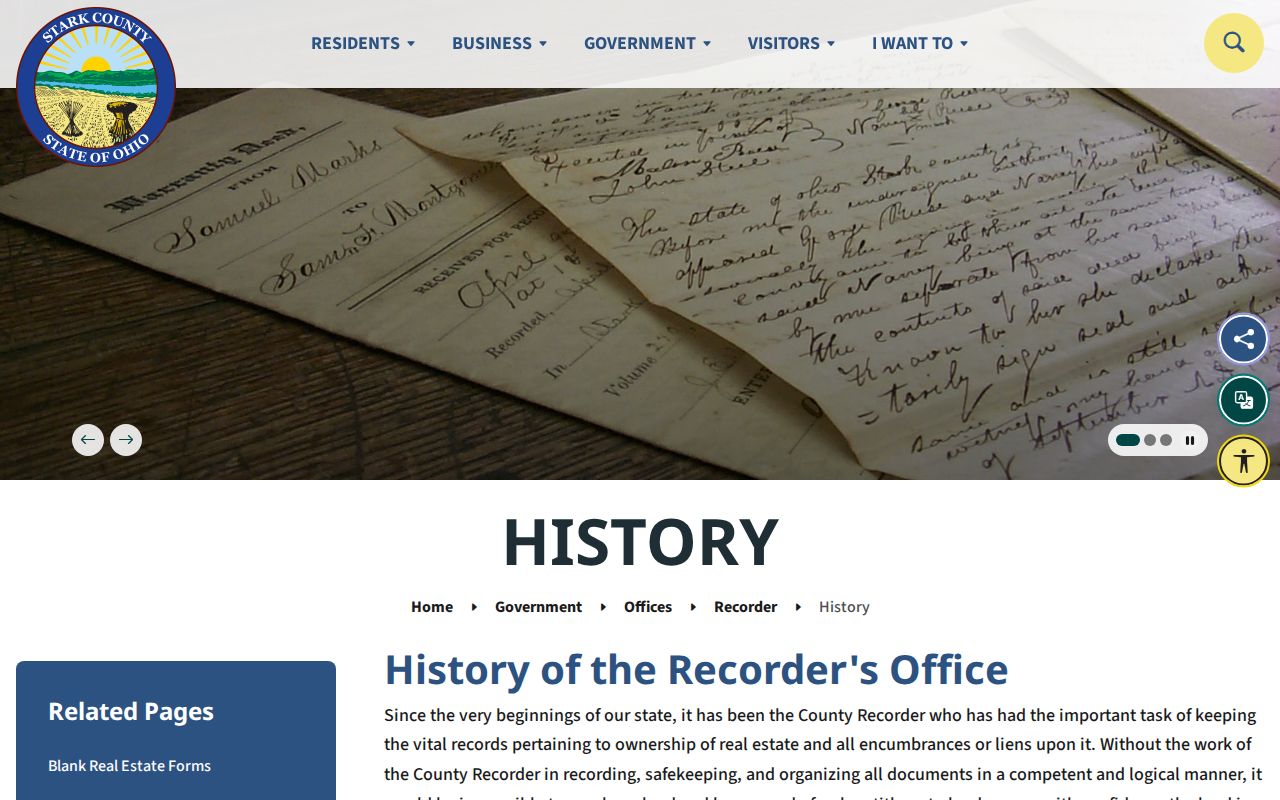
For a portal failure or a pre-1982 link, use the Recorder counter, phone, or mail path. The office is at 110 Central Plaza S, Suite 170, Canton, OH 44702-1409, 330-451-7443, weekdays 8:30 a.m. to 4:30 p.m. Online recorded-document copies are described as free; staff copies are $2 per page, self-service copies are $0.10 per page, and certification is $1 per document. Mail requests require the request, fee, and stamped self-addressed envelope. Confirm terms before ordering.
Note: The 1982 online guide boundary applies to documented name entries, not to the Recorder’s full 1809-forward land collection.
Trace Plain Township Deed Chains
Previous residents research needs an ownership backbone before it adds household sources. Open the current Stark County property profile and preserve the parcel ID, legal description, owner-of-record spelling, and tax district. The profile’s Sales or History choices can provide assessor information, but they are not a substitute for the recorded instrument. The legal description is the best thread when a postal rendering or street format changes.
- Search the address and record the parcel, legal description, tax district, and current owner-of-record spelling.
- Review the assessor’s Sales or History choices for a possible transaction, treating them as assessor data only.
- Use the Recorder’s no-punctuation name method to find the current party’s likely purchase document, then select its Instrument #.
- Record the document date and legal description. Search the earlier party in the reverse role and repeat the comparison.
- When the needed link predates the online guide or the portal stops, take the chain to the Recorder counter or mail request with the clearest legal-description reference.
A deed chain can show the documented land parties, not automatically every past resident. Pair it with a dated directory, census, newspaper, or probate source before stating a household connection.
Define Plain Township Deed Terms
Three short terms prevent many false joins in a Plain Township address history. They also explain why the address written on a current profile is helpful, but is not always the only search key.
- Grantor
- The party transferring an interest in a recorded document.
- Grantee
- The party receiving that recorded interest.
- Chain of title
- The sequence of recorded transfers traced backward through the land’s documentary history.
- Legal description
- The formal land description used in the records. It can bridge changes in street formatting, postal city, or township boundaries.
The Auditor profile also distinguishes the situs address from the tax mailing address. The situs is the parcel’s physical location. The mailing field is for tax delivery and may point elsewhere. Neither field alone establishes a complete household history.
Pair Plain Township Directory and Census Years
The historical household layer should begin at Stark Library with an address and a year. The library’s research FAQ confirms both the Canton City Directory and Canton Haines Criss+Cross Directory. The conventional directory moves from a printed name toward an address. Criss+Cross reverses that route and starts with the address. Exact local volume runs were not verified, so genealogy or reference staff should identify the best volume instead of filling gaps with an assumed sequence.
The library describes the Canton directory as often annual, later biannual, with a three-year World War II break, and now annual. An entry is adult- and householder-centered rather than a full household census. Record the spelling, printed address, abbreviation, and directory date as given. A directory collection search can continue through the Plain Township city directory reference without duplicating its shelf-by-shelf work here.
- Start with the known address, spelling, and nearest directory year.
- Use Criss+Cross when the address comes first, then copy the listing exactly as printed.
- Check nearby volumes while allowing for the World War II break and any missing local run.
- Compare the dated listing with census material released under the 72-year system, then test the address against the parcel’s legal description.
Find Plain Township Probate and Cemetery Clues
Probate and cemetery material can close a historic family trail after the deed and directory sequence is documented. The Stark Probate records page describes a split custody history. In 1988, older original groups went to the University of Akron Archives and Stark Library with the State Archivist, while estate files since 1810 remain on Probate microfilm. Ohio History archives resources are an additional research route when an archive consultation is needed. The Records Center guides people to available indexes during weekday business hours but does not perform genealogy research.
Stark Library lists an estate index for 1810–1890, guardianships for 1816–1900, a marriage index for 1809–1972, a will index for 1811–1942, and other historic material. Plain Township’s Eby Cemetery rules describe another limited record trail. Its Trustees and Sexton handle ownership certificates, warranty deeds, and burial authorization. No public name index was located, so it is useful for a documented family inquiry, not a name-browse shortcut.
Check Plain Township Address Change Records
A building charge can date a project at an address. It should not be read as a record of who lived there. The Stark Building charge search accepts a permit or invoice number, owner in last-name-first order, project street number and name, or contractor. Only one criterion is necessary. The Building Department covers the unincorporated area, but the research did not verify a full indexed permit-history range.
For Township zoning context, request a defined address, date range, and record category from Plain Township Zoning. No public search index was located. The zoning office is reachable at 330-492-4686 on weekdays from 8:00 a.m. to 4:00 p.m.; a narrow request under Ohio Public Records Act, R.C. 149.43, is the documented fallback. Use a permit or zoning response alongside parcel, deed, directory, and census evidence.
Note: A dated project clue can support a structure story, but it cannot identify the people who were present at the address.
Test Plain Township Boundary and Postal Labels
Plain Township’s records geography is a built-in historic check. A property profile can use Canton or North Canton as the postal city while the tax district identifies Plain Township. Keep the tax district, parcel, legal description, source, and date with each handoff. The Canton title on a directory likewise does not decide whether its address was in the City of Canton.
There is also a time boundary. Plain Township was one of Stark County’s original 1809 townships, and its earlier territory later included areas now organized into Lake, Lawrence, and Jackson townships. A former Plain Township reference needs a period map and legal description before it is connected to a current township address. This is a records-geography question, not a reason to merge similarly named places.
Close Plain Township Previous Residents Trails
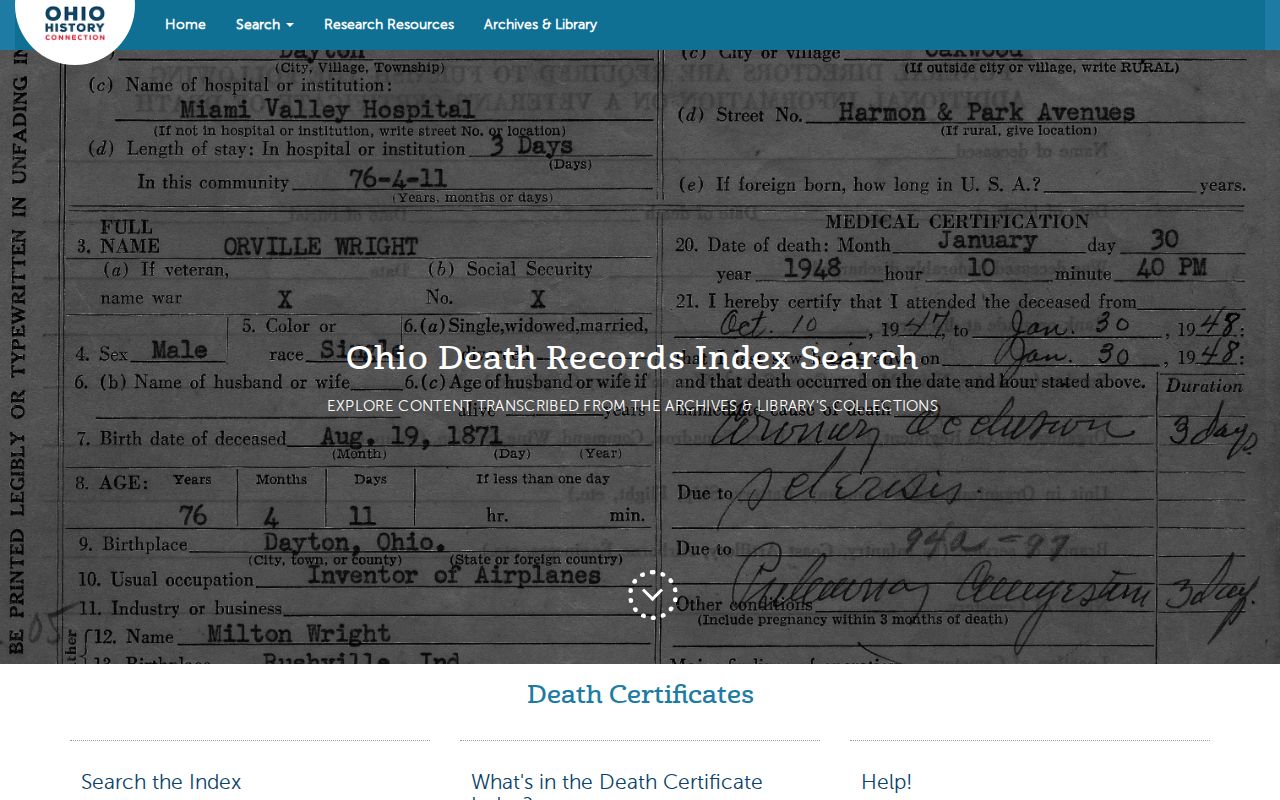
When an address trail reaches a death, estate, or migration point, check the date against the library’s news archive and the Ohio History death index. Stark Library describes its historical news archive as spanning 1810–1946. The Ohio resource is a historical index, not a substitute for the original record. A date match can direct the next question to Probate, an archive, or a library collection.
Sanborn maps available through Stark Library cover Ohio resource years 1882–1962, subject to confirmation that the needed community sheet exists. They can add structure and block context. They do not identify an individual. At every point, keep the previous-residents conclusion modest: an owner, a printed directory entry, a census household, or an estate relationship is evidence from its own dated source.